

A chapter closes—and a new one begins—for Selkirk College’s Class of 2026.
At the Convocation ceremony on May 21 in Castlegar, graduates celebrate the credentials they’ve earned and the futures they’re about to build. Two valedictorians will help mark the moment with farewell messages to their graduating class.
Launching a Career as an Educator
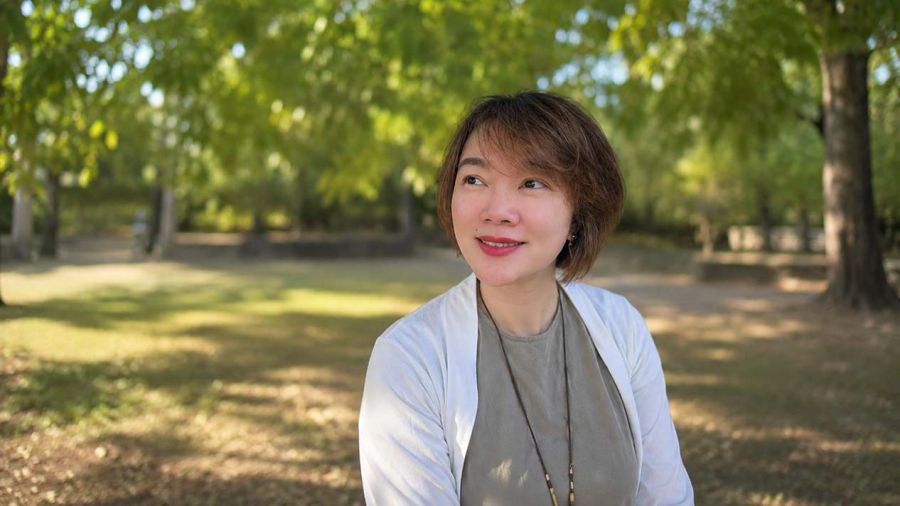
Tianjie Yu, Early Learning and Childcare – Diploma, came from China to the West Kootenay, where the mountains, rivers and community gradually gave shape to her learning. Her journey to post‑secondary studies was inspired by rethinking what it means to be an educator. Instead of starting with achievement, she wanted to focus on children’s presence—how they relate to others, share stories, ask questions and take responsibility in a shared world.
*This interview has been edited for clarity and length.
Why did you choose Selkirk College?
I chose Selkirk College because I was looking for a learning environment that recognizes students beyond their grades and assignments. When I arrived, I was not only entering a new program; I was also learning how to live in a new country, a new community and a new education system. Everything felt unfamiliar, from housing and transportation to health care, textbooks and classroom expectations.
What stood out to me about Selkirk College was how practical and human the support felt. The college provided information international students truly need, such as transportation, housing and settlement support. I was even able to apply for student housing after the semester had already started, which made a huge difference for me. Later, I also attended workshops and information sessions about study permits, post-graduation work permits and immigration pathways. These are not small things for international students; they are part of whether we can feel stable enough to learn.
In Selkirk College’s learning community, I slowly came to experience something very new to me. I was encouraged to turn toward my own story and consider how it could contribute to my learning and future practice. It felt unfamiliar at first. I was used to an education that asked students to fit into a standard shape. In our classroom, my culture, memories and lived experiences became part of the learning we shared. When what we carry genuinely enters the classroom, education is no longer a single, fixed system. It becomes something we keep questioning and holding open together.
For me, that is what made Selkirk College such a meaningful choice: it offered a learning space where I could be challenged and supported while also being recognized for who I am.
How was your learning connected to the surrounding community?
When I first came here, much of my learning happened through the ordinary work of entering a new community. I was learning how to get groceries, finding the places I needed, and giving nicknames to the stores and streets we visited often. As I paid attention to the people, stories and living beings around me, my understanding of community began to expand into a living network of relationships.
The surrounding community became part of my learning in ways that were both lived and deeply personal. The people I met here helped me find steadiness in a new place through generosity and openness. Those experiences made me think about what it means to learn with and within a community, rather than about it. They also made me wonder how children and families come to feel that they are part of the places where they live.
How has living in the West Kootenay shaped your approach to being an educator?
For a long time after I arrived in Canada, I spent many quiet moments looking at the Columbia River from my window. I did not know much about this place yet, but the river was there every day, steady and close. Later, as I walked in my neighbourhood, other small moments began to gather around it: the smell of laundry in the air, the streets I slowly became familiar with and the feeling of returning to the same places again and again. This was how connection began for me—not as one big event, but as something that slowly settled into memory.
These everyday experiences began to meet what I was learning about place, land and belonging. Learning with place, for me, became a way of asking whose stories are present, whose voices may be silenced, and how we live respectfully with the land, histories, people, and other beings around us. In my future work with children, I hope to walk alongside them toward deeper relationships with the places they live, while also staying open to the many stories and lives those places hold.
My teachers helped me carry these questions into how I think about the early years, about children, and about ourselves as both educators and human beings. They invited us to think about children coming to us as part of their families, cultures, histories, communities and land, and to hold both who they are in the present and who they are becoming.
Learning here also asked me to reflect on reconciliation with Indigenous Peoples, which is a context very different from the one I grew up in. I came to this learning with very little knowledge of the histories carried by this land, and that not-knowing has asked me to learn with more humility and reverence. This has invited me to sit with history as something that continues to live among us, carrying languages, cultures, wounds, values, silences and responsibilities.
These histories live in the relationships we build with children and families, and they make me ask what responsibilities I hold when families entrust their children to me. They also keep me asking what kind of future is worth building, who belongs in that future and how they may take part in carrying it forward.
How did your time at Selkirk College prepare you to launch your career?
The program supported me in connecting theory, practice and reflection in very real ways. In class, we built a strong foundation in the many responsibilities of the field. We were also encouraged to think about our own thinking: what we believe about children, learning, relationships and pedagogy.
The program was full of hands-on and place-based learning. We sang, told stories, cooked, welcomed guest speakers from the community, and even walked by the river to notice breath, movement, sound, land, and place. Having a campus beside the river is such a beautiful and invaluable gift. These experiences helped me see how much this work asks of us: knowledge, imagination, reflection, purpose, relationships and the ability to make ethical and thoughtful decisions in real contexts.
Practicums then helped me bring that learning into real centres, step by step: first observing, then participating, then planning, documenting, reflecting, adjusting and gradually stepping more fully into the educator role. Because we had practicums in different settings, I was also able to see different approaches and commitments in the field, and to better understand what kind of educator I hope to become.
Now that you’ve graduated, what is your next step?
My next step is to work in the early years field in the West Kootenay. I hope to join a setting where I can continue learning from colleagues, children and families, and contribute to intentional early years practice.
I am also grateful that Selkirk College offers the Inclusive Practice Advanced Certificate in Early Childhood Care and Education. While I’m working, I hope to continue learning, especially how to better support children with diverse needs.
In the future, I would also like to complete a bachelor’s degree in this field and, when the time is right, continue to graduate studies, so I can keep deepening my understanding of this work and of what I bring to it.
How do you hope to make an impact on your community?
I hope to make an impact by advocating for early childhood educators and helping this work be more visible, understood and respected in the wider community. Early childhood education is complex, thoughtful and deeply important work, and I hope to carry forward what I learned from my instructors, classmates and practicum experiences into the field.
In Chinese, we have a saying that one stone can stir up a thousand ripples. I know my own contribution may be small, but I believe in the collective strength of my graduating class, those who came before us and those who will come after us. Together, we can help bring positive change to the early years sector and support a deeper recognition of the value of this work.
As an international student, I also hope to support newcomers who arrive in the Kootenays to study and build a life here. I know what it feels like to arrive with many questions, to feel uncertain, and to need practical and emotional support. In the future, I hope to be involved in community work that helps other international students and newcomers feel less alone and more connected to this place.
What would you say to someone who’s thinking about coming to Selkirk College?
I would say: come. Come with your questions, your experiences and your uncertainties. Selkirk College is full of surprises. You will learn from passionate and supportive instructors, classmates, community members and the place itself. You gain much more than academic knowledge here.
I am also deeply grateful for how Selkirk College welcomes learners at different ages and stages of life. Coming from my background, I was not used to seeing post-secondary education as a space where people of many ages could learn together and be valued equally.
At Selkirk College, I saw that lifelong learning is not just an idea. It is built into the culture of the college. It reminded me that it is never too late to begin again, to change direction or to discover a new part of yourself.