

Forest Technology - Diploma
Overview
The Forest Technology Program has been providing forest sector employers with skilled graduates for over fifty years. It provides an ideal starting point for learners excited by the combined career challenges of working in BC’s rugged outdoors and finding modern solutions to current forest management issues. Our primary goal is to provide job-ready graduates to potential employers in both private industry and government.
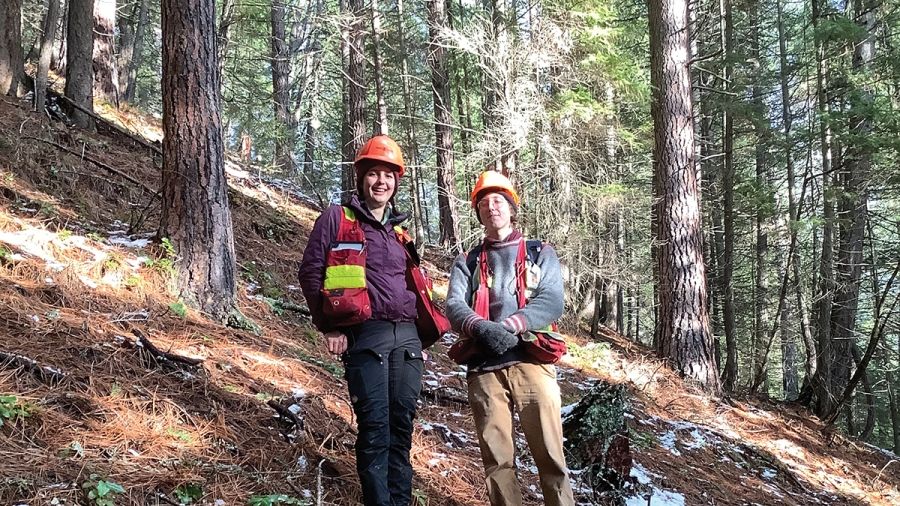
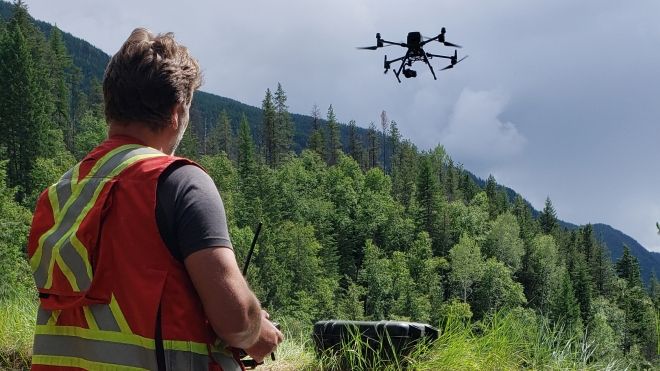
Students spend more than 50 per cent of their class time in the field learning in real-world projects, which enables collaboration with industry professionals and familiarization with current forest technology used by industry employers. The program also emphasizes advanced technology, including mobile data collection, geographic information systems and global positioning systems applications. Graduates are benefiting from our training and the recognition by government, industry and communities of the importance of better forest management.
Accreditation
The Forest Technology Program is nationally accredited through the Canadian Forestry Accreditation Board (CFAB). Students successfully completing our diploma automatically qualify to become a trainee registrant with Forest Professionals British Columbia.
To help ensure the program is relevant, the quality of the program has been assessed against industry outcomes. The program receives feedback from our Program Advisory Committee, which consists of industry and government representatives, including many past graduates.
Transferability
The Forest Technology Program ladders into the Bachelor's Degree in Geographic Information Systems.
There is a long-standing tradition of our graduates transferring and successfully completing university degrees. Graduates have successfully transferred credit toward degrees in universities throughout Canada and the United States.
Selkirk College also has formal transfer arrangements with:
- University of Northern BC, Bachelor of Science Forest Ecology and Management
- Thompson Rivers University, Bachelor of Natural Resource Management
- Lakehead University, Honours Bachelor of Science in Forestry
Please note that students planning to transfer into a degree program at another post-secondary institution must check the transfer requirements of the program they wish to enrol in. It is strongly recommended that students consult with the program advisor of the receiving institution to ensure they have all of the necessary transfer requirements.
Common Core
The first year of Forest Technology consists of a core of environmental courses in soils, hydrology, botany, surveying, fish and wildlife, ecology, mapping, communications, computers and math. This core year is common with the Applied Environmental Science and Planning Technology (AESP) and Recreation, Fish & Wildlife programs.
The second year of each program synthesizes the skills, knowledge, and professionalism of first year with applied management, planning, and advanced techniques and principles. Integration of learning in each program is required.
The common core allows students to obtain an additional diploma in Recreation Fish & Wildlife or Applied Environmental Science and Planning Technology by completing the relevant third year.
On-the-Land and Off-Campus Learning
As part of this program, students will participate in field labs, field trips, site visits and other experiential learning opportunities outside the classroom. To ensure a safe and informed learning experience, students will be required to complete a participation agreement during the first days of classes.


News

Program Outcomes
Upon successful completion of this program, learners will be able to:
1. Implement best management practices within the current legal framework to facilitate and communicate ethical, science-based forestry
2. Practice forestry that reflects diverse public values through consultation, collaboration, and communication with a variety of interest groups
3. Use critical thinking, appropriate data collection strategies, and quantitative summaries to focus forestry practices
4. Collect, analyze, and interpret forestry-related data using accepted, industry-relevant technology
5. Access current landscape-level management directives and understand how they influence stand-level management decisions
6. Use geospatial technologies to manage diverse data sources for informing forest practices
7. Interpret ecological disturbance types such as changing climate, wildfire, and others, in ecosystem structure, health, and function as a basis for management prescriptions
8. Apply a personal growth mindset as part of effective teamwork, while respecting workplace diversity, culture, and gender differences
9. Apply learned skills and a problem-solving mindset to facilitate successful employment within the profession of forestry
10. Employ safe work practices across the spectrum of forestry work
11. Model a commitment to the United Nations Sustainable Development Goals (SDGs), as they relate to forestry and land management in British Columbia
12. Recognize the diversity of Indigenous Nations’ cultures and traditions as distinct knowledge systems that are valid when building respectful engagement, consultation, and collaborative relationships
13. Acknowledging the Calls to Truth and Reconciliation, explore how ecosystem management can include Indigenous perspectives and practices in a reciprocal approach
Admission Requirements
In addition to meeting the general admission requirements to Selkirk College, the applicant must meet the following Environment and Geomatics Programs requirements to be considered fully-qualified:
Successful completion of these high-school or equivalent courses:
- Foundations of Mathematics 11 with a minimum of 67% or higher
- Any BC Science Curriculum (with at lab component) at the grade 11 or 12 level with a minimum of 67%
- English Studies 12, English First Peoples 12, or ENGL 60 with a minimum of 67% or higher
NOTE: Applicants in Grade 12 at the time of application must show proof of registration or completion of the above courses.
Applicants that require upgrading may still gain provisional acceptance for program seats if they can show proof of registration of prerequisite high school courses. Completion of prerequisite courses must occur by July 31 before fall term starts.
A self-assessment fitness checklist is available on request.
Computer competency is an important element of success in the program. Prior to starting the program, it is strongly recommended that students have entry-level experience with word processor, spreadsheet and web-browsing software. Check out Selkirk College Community Education & Workplace Training computer courses.
General
Applicants must submit a completed application form and other required documents (i.e. secondary school and any post-secondary transcripts, application package) to the Registrar’s office.
(i) A Class 5 Driver's license is recommended but not required.
(ii) Most learning activities within the program reflect industry norms. A demonstrated interest in, and aptitude for, outdoor work is essential as much of the work is done in the field, often under adverse weather and topographic conditions. Training often occurs in forested mountain terrain. Therefore, applicants should be in good health and physical condition. Activities will be taught in all weather conditions, and require student participation walking, hiking and snowshoeing outside for up to eight hours per day. Activities in which the student must participate may include but are not limited to the following: hiking , snowshoeing, and operating power equipment such as chainsaws. Other activities may include touring and observing active industrial operations. Students will be required to observe all standard and required safety practices and procedures at all times.
APPLICATION PROCESS
The Application process is complete and admission to first year will be considered with:
1. Receipt of the "Application for Admission" form plus the required application fee, and;
2. Receipt of official high school and post-secondary education transcript(s) or interim transcript or proof of registration in prerequisite courses (if in Grade 12), and;
3. The date when an applicant's file is complete is the date when all the requirements of a) and b) above have been fulfilled.
CHANGE OF PROGRAM
There is some limited availability for students to change programs in the first year however, the following conditions must be met:
1. Students who want to change programs must apply in writing to the School Chair before January 15th during the first year of their original program.
2. Program changes will only be permitted provided there is space as determined by the School Chair.
3. Students may need to complete prerequisite courses prior to the beginning of the second year.
CO-OP EDUCATION
This program is eligible for co-op education opportunities. Co-op education courses will provide students with documented, program relevant work experience that is recognized with a designation on their transcript.
Please refer to Policy 8370 Selkirk College Co-operative Education and Selkirk College Co-operative Education Procedures for additional information regarding Co-op Education at Selkirk College.
PROMOTION
1. Promotion to Subsequent Semester
Each semester must be completed with a Grade Point Average of 2.00 or better with no more than two grades below a 60% to continue into the next semester. GPA will be based on all grades for courses scheduled for a given year and semester as per the course calendar.
2. Admission Requirements - Second Year
All first-year courses must be completed with a grade of 60% or better before a student is admitted to the second year of their program. Students in this situation should contact the School Chair.
3. Prerequisite Courses
Students receiving a final grade of lower than a 60% in a prerequisite course will not be able to register in the subsequent course requiring the prerequisite. Students in this situation must re- register in, and successfully complete the course with a minimum grade of 60% before going on to the subsequent course.
GRADUATION
Credentials:
i. A cumulative GPA of 2.0 and a minimum grade of 60% in all courses in the program is required for graduation.
ii. A student will be expected to complete the requirements for a diploma within a maximum of four years from the initial admission.
iii. No diploma will be awarded without meeting all obligations to the College. This includes returning all equipment signed out and paying all outstanding fees.
b. Types of Credential Received
Diplomas – Forest Technology
c. Requirements: (see Policy 8617: Graduation)
Certificates: All students strongly recommended to have a valid Worksafe BC approved first aid certificate at the time of graduation. These courses are offered throughout the year through Selkirk College Community Education & Workplace Training.
Courses
ENVR150 - Hydrology I
ENVR 150 Hydrology I is an introductory study of water in our environment including its properties, the natural processes which affect it, and climate and weather. Students will gain practical experience in the collection and analysis of field and laboratory data using standard techniques and equipment.
ENVR160 - Surveying and Field Measurements
ENVR 160 Surveying and Field Measurements is an introduction to the practical use of common survey instruments and techniques used by Environmental technicians. As well, the course will introduce the student to various sampling methods used to collect, assess, classify, and evaluate field data. Emphasis is placed on the proper care and use of basic surveying and measurement tools and the skills involved in collecting and interpreting precise and accurate field data.
ENVR162 - Applied Botany and Ecosystem Classification
ENVR 162 Applied Botany and Ecosystem Classification is an introduction to the principles of Botany and Ecosystem Classification. Botany lectures will focus on plant classification, botanical terms, plant morphology, and plant physiology. Topics include: plant cell structure, plant tissue function and structure, photosynthesis and respiration, transpiration and translocation. Botany labs will focus on learning to identify about 100 native plants commonly found in the West Kootenay Region of B.C., specifically key indicator species. Ecology lectures will focus on ecosystem classification using the Biogeoclimatic Ecosystem Classification System (BEC) of B.C. Other key topics include the study of climatic factors, disturbance and succession, landscapes and stand structure. Ecology labs focus on classifying ecosystems (including soils, site and vegetation) to site series using BEC. Labs are mainly field based.
ENVR164 - Soil and Earth Sciences
ENVR 164 Soil and Earth Sciences will cover the identification of common rocks and minerals, landforms and soils of British Columbia. Learners will be introduced to the study of physical geology and geomorphology in relation to management of the forest environment and landscape. Learners will gain skills and knowledge in rock and mineral identification, description of the physical and chemical qualities of soils, and identification and classification of landforms and terrain. Skills will also be developed with respect to interpretation of geology, landforms and soils for environmental management.
ENVR190 - Computer Applications in Natural Resource Management
ENVR 190 Computer Applications in Natural Resource Management. This introductory course builds on students' basic computer skills, focusing on applications relevant to careers in the environment and geomatics sectors. Students will learn to organize and manage files, create presentations and graphics, and develop spreadsheet skills. The course also covers formatting professional documents, setting up data collection on tablets, and transferring data between systems. Emphasis is placed on applying these skills to real-world tasks and demonstrating professionalism in digital work.
MATH160 - Technical Math Review
MATH 160 Technical Math Review is a mathematical review course for first-year students in the School of Environment and Geomatics (SEG) diploma programs. This course will provide a review of mathematical concepts which you will need for your other SEG courses. Materials to be covered include: unit conversions, trigonometry, exponentials and logarithms, problem solving, slope calculations, distance and direction calculations.
TWC150 - Introduction to Technical Writing and Communications I
TWC 150 Introduction to Technical Writing and Communications I is an introduction to general principles in written technical communication and their application to environmental concerns and workplace communication. Classroom sessions focus on developing writing skills, the organization and presentation of data, basic report formats, and job search techniques.
ENVR154 - Maps and Navigation
ENVR 154 Maps and Navigation focuses on the navigation skills required of technologists working outdoors to locate oneself, stay ''found'', and return safely from the field. The course includes hands-on use of navigation tools in field settings including map, compass, aerial imagery, altimeter, and Global Positioning System (GPS). Pre-trip planning in a navigation context will also be covered including developing access plans and route plans, and estimating travel times.
ENVR158 - Introduction to Geomatics
ENVR 158 Introduction to Geomatics is an introduction to applied mapping and geographic information systems (GIS) theory and applications. The first half of the course will be focused on introducing basic uses of remotely sensed imagery and exploring applied mapping technologies, including Google Earth and Internet Mapping websites. The second half of the semester will be focused on learning basic Geographic Information System concepts and applying GIS technologies to environmental, renewable resource management, and planning fields. Emphasis will be placed on how geographic data is represented, collected, managed, analyzed, and displayed using GIS tools. Hands-on experience will be developed with desktop GIS software, ESRI's ArcGIS for Desktop.
ENVR163 - Terrestrial Ecology and Biology
ENVR 163 Terrestrial Ecology and Biology builds upon the concepts from ENVR 162 with further studies of local forest ecosystems. Students will identify key forest structural components and study the role that disturbance (such as fire), environmental gradients, and competition play in defining a species' niche. Participants will also examine the role of primary and secondary growth, nutrient uptake, reproduction, and survival mechanisms for plants. Winter plant identification, ecosystem form and function, and plant adaptations to timberline will also be examined. A practical field based assignment will form a major portion of the term assessment. This project includes collecting the data in the field, entering and analyzing the data in the computer lab, and presenting the data in a written scientific report.
ENVR170 - Fish and Wildlife Ecology
ENVR 170 Fish and Wildlife Ecology is designed to introduce students to the general ecological principles, taxonomy and management of fish and wildlife in British Columbia.
MATH190 - Resource Statistics I
MATH 190 Resource Statistics I is an introductory applied statistics course for environment and geomatics students. Topics include: types of data, descriptive statistics, probability and random variables, discrete probability distributions, continuous probability distributions, confidence intervals, sample size, and hypothesis testing.
TWC151 - Introduction to Technical Writing and Communications II
TWC 151 Introduction to Technical Writing and Communications II is an introduction to general principles in written scientific communication, research strategies, and oral presentations. Lectures and in-class writing focus upon research strategies, the formal report, technical style, and graphic illustration. Students practice delivery techniques for oral presentations and learn research skills for research report preparation.
FOR278 - Forest Technology Field School
FOR 278 Forest Technology Field School is a two‑week, end‑of‑semester field school provides immersive, hands‑on training to strengthen students’ technical field skills in preparation for summer employment and the second year of the Forest Technology program. Through intensive applied learning in real-world forestry settings, students gain practical experience with core operational activities, including:
- Safe and effective use of forestry field equipment
- Silviculture surveys and prescription‑related fieldwork
- Forest measurements and sampling techniques
- Cutblock development, layout, and basic engineering
- Wildfire operations and fuel management practices
- Geospatial data collection, navigation, and analysis
- Applied ecology and wildlife habitat monitoring
By participating in these activities, students build the practical competencies required for professional, safe, and effective fieldwork aligned with provincial and federal forestry standards.
FOR250 - Silviculture I
FOR 250 Silviculture I is an introduction to Silviculture as it is traditionally viewed; the art and science of establishing and tending forests to meet sustainable environmental, social, and management objectives. It will prepare the student for immediate employment as a forest technologist through instruction in silviculture theory, the application of silvicultural treatments and the use of various sampling strategies to monitor silviculture activities. Emphasis will be on basic silviculture; site preparation, natural and artificial regeneration, various survey procedures from Regen Delay to Free Growing. Field and office case studies are used throughout the course.
FOR260 - Applied Forest Hydrology and Engineering
FOR 260 Applied Forest Hydrology and Engineering. This course covers the planning and establishment of natural resource road access including Total Chance Planning, assessing terrain stability and potential environmental impacts of road construction route reconnaissance, road location, survey, and design techniques and construction costing, road construction methods, bridges and drainage structures, road management strategies, as well as the applicable legislation and permitting requirements. The course also reviews basic forest hydrology principles and the effects that resource road construction and forest harvesting might have on the hydrology of a forested watershed. Additionally, the Skattebo Integrated Project includes elements of project management such as work plan formulation and scheduling. Aspects of a safe work environment are emphasized during each learning activity.
FOR265 - Forest Measurements
FOR 265 Forest Measurements is a study of the policies and procedures used for timber cruising, product valuation, log scaling, and waste and residue assessment in British Columbia. Using timber valuation as a focal point, emphasis is placed on field data collection techniques, sampling methods, statistics and data compilation. The roles of the Ministry of Forests, Lands and Natural Resource Operations and the forest industry are also explored in class and during onsite tours of local forest products manufacturers.
FOR271 - Applied Ecology and Range Management
FOR 271 Applied Ecology and Range Management provides enhanced and new skills and knowledge related to sustainable management of forest ecosystems. Ecological, operational, social, economic, and legislative considerations will be presented in this course. Emphasis will be on management strategies related to a number of ecological topics including; silvics, natural disturbance types, range management, riparian areas, fish habitat, soils, and soil hazards, fuel management, visual quality, species at risk, biodiversity and resiliency. Field and office case studies are used throughout the course. By the end of the course, students are expected to be able to apply knowledge gained about managing for these individual values and resources towards the formation of integrated and comprehensive forest management strategies.
FOR274 - Forest Health
FOR 274 Forest Health consists of an extensive field examination of a wide range of prominent forest health agents and conditions. This includes field recognition, biology, ecological role and forest management implications of various forest insects, fungi and abiotic agents. Other topics include the recognition and management of invasive weed species, assessment of forest health agents in conjunction with silviculture surveys and harvesting prescriptions, management of root diseases and assessment of bark beetle occurrences.
FOR280 - Applied Research Project
FOR 280 Applied Research Project is an introduction to the basic principles and methods of research with an emphasis on forest resources. The objective of this course is to assist each student in completing an applied research project that has both a field-based data collection component, and a literature-based research component. Students will select an approved research topic and complete a number of assignments including writing a research proposal, and producing final report. The research results and recommendations will be presented at the SEG student conference. This course spans the fall and winter semesters.
ENVR250 - Indigenous Rights and Environmental Management
ENVR 250 Indigenous Rights and Environmental Management is an introduction to Indigenous cultures and traditional practices as foundational teachings of sustainability. The overarching focus of the course is recognizing and acknowledging Indigenous rights and traditional knowledge as they relate to environmental management.
With a two-eyed seeing approach, topics associated with environmental management will be viewed through the lens of Indigenous Rights and Truth and Reconciliation. The four main overlapping themes of the course are Indigenous cultures & practices, legislation, treaties, and Indigenous vs. Western approaches to environmental management and protection.
FOR200 - Field Trip Study
FOR 200 Field Trip Study provides an opportunity for students to experience diverse ecosystems, forest management practices, Indigenous perspectives, and land management issues in different regions of the province. Students will be active in co-creating ways to ensure their visits are grounded in respect, reciprocity and responsibility. Through this field trip experience, students will develop their professional communication skills and build up their confidence in preparation of entering the workforce.
FOR251 - Silviculture II
FOR 251 Silviculture II advances students' understanding of silviculture and its application in British Columbia’s forest industry. Through experiential and land-based learning activities, students will examine stand dynamics, reforestation strategies, diverse Indigenous perspectives, and the use of silvicultural systems to meet management objectives. Students will explore both artificial and natural regeneration techniques, along with strategies for forest stand establishment and tending, including spacing, commercial thinning, pruning, and fertilization. By integrating biological, ecological, operational, cultural and economic considerations, students will be prepared to make informed decisions and develop defensible silviculture prescriptions. Students will prepare a legally and operationally sound site plan that reinforces the connection between silvicultural practices and broader forest planning processes.
FOR253 - Forest Policy and Resource Management
FOR 253 Forest Policy and Resource Management provides an in-depth examination of the policy frameworks that shape forest management in British Columbia. Students will explore the legal, economic, and institutional foundations of forest policy, including timber tenure systems, timber valuation and appraisal processes, and key legislation such as the Forest and Range Practices Act. By examining contract agreements, forest economics, financial analysis, and allowable annual cut (AAC) determinations, students will focus on how these elements inform and constrain operational forest management.
Through a combination of lectures, case studies, and applied analysis, students will critically examine the tensions, challenges and opportunities within forest policies that aim to support sustainable management of renewable natural resources including cultural considerations that affect seven generations and beyond. This course introduces students to a wide range of forest policy considerations, with a focus on forest landscapes in British Columbia.
FOR261 - Forest Harvesting
FOR 261 Forest Harvesting is an in depth study of timber harvest systems and supporting technologies including: harvest planning, mapping and GIS analysis, environmental impacts, field engineering considerations and system costing. The course is designed to reinforce foundational skills such as field note taking, measurements and safety. Theoretical emphasis will be given to the phases of timber harvest and the potential role of ground, cable and aerial based harvest systems as well as log transport systems. Health and safety issues surrounding timber harvesting operations will be explored. Through two projects integrated with other courses, project management elements will be learned in an applied setting.
ENVR291 - GIS Applications in Forestry
ENVR 291 GIS Applications in Forestry continues to introduce Geographic Information Systems (GIS) through the industry-standard ArcGIS Pro and other related software and apps. Students will apply GIS concepts and tools to Forestry scenarios, including through an applied integrated project within the second year FOR program with standard GIS deliverables (Data and Map products).
Tuition & Fees
All amounts are estimates and are subject to change. Tuition amounts are based on a full-time course load. Please note that many programs have additional costs beyond those listed here. For more information, please visit Tuition & Fees.
Find Out More
We look forward to connecting with you! Fill out this form and we'll reach out to you.